 LTG
LTGSustainability topics
Material sustainability topics within LTG Group are identified through a double materiality assessment, which evaluates both the Group’s impacts on internal and external stakeholders and the environment (impact materiality), as well as the effects of sustainability matters on the Group’s operations and performance (financial materiality). The assessment results are reviewed annually. In the event of significant economic, political, organisational, or climate-related developments, a comprehensive reassessment is conducted, involving stakeholders where feasible.

Climate change
Climate change mitigation
LTG Group recognises its responsibility for its climate impact and is actively committed to reducing greenhouse gas (GHG) emissions. Due to the use of fossil fuels and other carbon-intensive energy sources, the Group’s operations generate a significant GHG footprint, resulting in material impacts across the value chain.
The Group’s strategy and approved Sustainability Policy set out clear targets and a commitment to achieving climate neutrality. In the long term, GHG emissions management is guided by a structured decarbonisation plan, which includes initiatives such as railway electrification, the acquisition of electric trains and locomotives, and infrastructure modernisation. In addition to reducing climate impacts and strengthening LTG’s position as a leader in sustainable transport, the plan enables both the Group and its business customers and passengers to contribute to emissions reductions.
Climate change adaptation
Climate change is having an increasingly significant impact on business operations, particularly in the transport sector, where extreme weather events can disrupt operations, damage infrastructure, and affect service delivery. Such disruptions could adversely affect not only the Group itself but also its customers, making freight transportation less reliable for business clients and limiting passengers’ ability to reach their destinations.
In response to these challenges, the Group has conducted a comprehensive climate risk assessment. This process includes the evaluation of both physical and transition climate risks and is integrated into the Group’s overall risk management framework.
Energy
LTG Group’s operations, which include passenger and freight transportation, require significant amounts of energy, particularly for traction, infrastructure heating, and lighting. A portion of this energy is still sourced from carbon-intensive fuels, including fossil fuels, resulting in adverse environmental impacts and contributing to the Group’s greenhouse gas (GHG) emissions footprint.
In response, LTG Group is implementing an extensive electrification programme aimed at gradually phasing out the use of fossil fuels. The electrification of railway lines, the acquisition of electric trains, and the introduction of energy-efficiency solutions will not only reduce emissions but also improve the efficiency of infrastructure operations.
The Group’s actions in this area contribute to the sustainability of the entire value chain. Lower-energy-intensity solutions and railway electrification support the development of cleaner transport services, benefiting both business customers and individual passengers.
Pollution
Air pollution
Although LTG Group’s operations are not considered highly polluting, the Group responsibly manages all potential sources of pollution and strives to minimise its environmental impact.
Air pollution may arise from stationary sources such as fuel-combustion equipment, welding facilities, and paint shops. The Group continuously monitors pollution levels and implements preventive measures to reduce emissions and modernise its infrastructure.
Soil pollution
Soil pollution is primarily associated with historical contamination on properties managed by the Group. Remediation activities and environmental monitoring are carried out to protect groundwater resources and safeguard the quality of life of nearby communities.
Circular economy
Waste
LTG Group is committed to reducing waste generation and ensuring the responsible management of waste across all areas of its operations. Priority is given to waste prevention, sorting, and recycling, thereby minimising environmental impacts.
The Group applies sustainable practices in infrastructure maintenance, repair activities, and day-to-day operations, while ensuring that waste is managed in compliance with applicable legal requirements. LTG continuously seeks opportunities to optimise processes and promote circular economy principles.
Own workforce
Working conditions
LTG Group is committed to providing safe, fair, and inclusive working conditions in line with national and international standards. The Group promotes employee well-being, supports social dialogue, and encourages employee involvement in decision-making processes.
The nature of transportation, construction, and maintenance activities involves occupational health and safety risks. To effectively manage and mitigate these risks, the Group operates a comprehensive safety management system designed to ensure a safe working environment for all employees.
Employees are the foundation of the Group’s operations, ensuring business continuity, service reliability, and the successful implementation of innovation and development initiatives.
Equal treatment and opportunities for all
LTG Group fosters an inclusive working environment where every employee has equal opportunities to develop and advance their career. The Group promotes professional growth, equal opportunity principles, and internal mobility, seeking to make the best use of employees’ skills and potential.
LTG implements training and development programmes that help build future-ready competencies, strengthen the Group’s competitiveness, and support a culture of continuous learning. Employee engagement and development are essential enablers of sustainable business performance and long-term success.
Data protection
Data Privacy and Protection of Personal Data
LTG Group takes a responsible approach to the protection of employees’ personal data. Given the large volume of data processed and its sensitive nature, the Group places particular emphasis on ensuring privacy and effectively managing related risks.
In accordance with the laws of the Republic of Lithuania, the EU General Data Protection Regulation (GDPR), and internal policies, LTG ensures the security, confidentiality, and lawful processing of personal data across all areas of its operations.

Communities
Public and traffic safety
LTG Group actively strengthens its engagement with communities, striving to create an inclusive and sustainable environment for all.
Particular attention is given to managing safety-related impacts. The Group consistently implements traffic safety measures aimed at raising public awareness, increasing knowledge of safe behaviour practices, and introducing solutions that help reduce the likelihood of accidents and incidents.
Customers
Customer experience
LTG Group is committed to creating a convenient, safe, and inclusive experience for all customers, including passengers and business partners. The Group continuously improves its services based on customer feedback and insights, striving to ensure that they are accessible, user-friendly, and responsive to diverse needs.
Guided by its sustainability commitments, LTG ensures respectful and equitable customer service, transparent communication, and the responsible handling of data. The Group seeks to strengthen customer trust and create long-term value for both its customers and society as a whole.
Caring not only for the well-being of LTG Group employees, but also for that of contractors, service providers, and other partners, we are committed to creating an environment in which every worker, regardless of their employer, can work safely. Therefore, it is important to us that everyone present within the territory of the LTG Group companies is aware of existing and potential hazards and knows how to protect themselves against them.
Before entering the company’s premises, please familiarize yourself with the information relevant to the nature of the activities you intend to carry out:
- Safety Guidelines for Persons INTENDING TO WORK / CARRY OUT ACTIVITIES within the territory of AB Lietuvos Geležinkeliai Group companies;
- VISITOR Information Notice for the territory of AB Lietuvos Geležinkeliai Group companies;
or (and), if you are the organizer of such activities within the territory of the LTG Group companies or a self-employed person:
- Safety Guidelines for an ECONOMIC OPERATOR intending to carry out activities within the territory of AB Lietuvos Geležinkeliai Group companies.

Business ethics
Business integrity
LTG Group applies a zero-tolerance approach to corruption and implements preventive measures in line with legal requirements and the expectations of the Ministry of Transport and Communications. The Group’s Anti-Corruption Policy promotes transparency, leadership commitment, employee engagement, the prevention of conflicts of interest, and restrictions on gifts and hospitality. LTG also operates an anti-bribery management system aligned with the ISO 37001 standard, supporting the systematic assessment of risks, the promotion of transparency, and the strengthening of corruption resilience across all levels of the organisation.
The Group has adopted a Whistleblowing Policy, which enables employees and external stakeholders to report actual or suspected misconduct, including corruption-related violations, anonymously through the dedicated “Transparency Line” reporting channel and other reporting mechanisms.
Supplier relationships
Decarbonisation
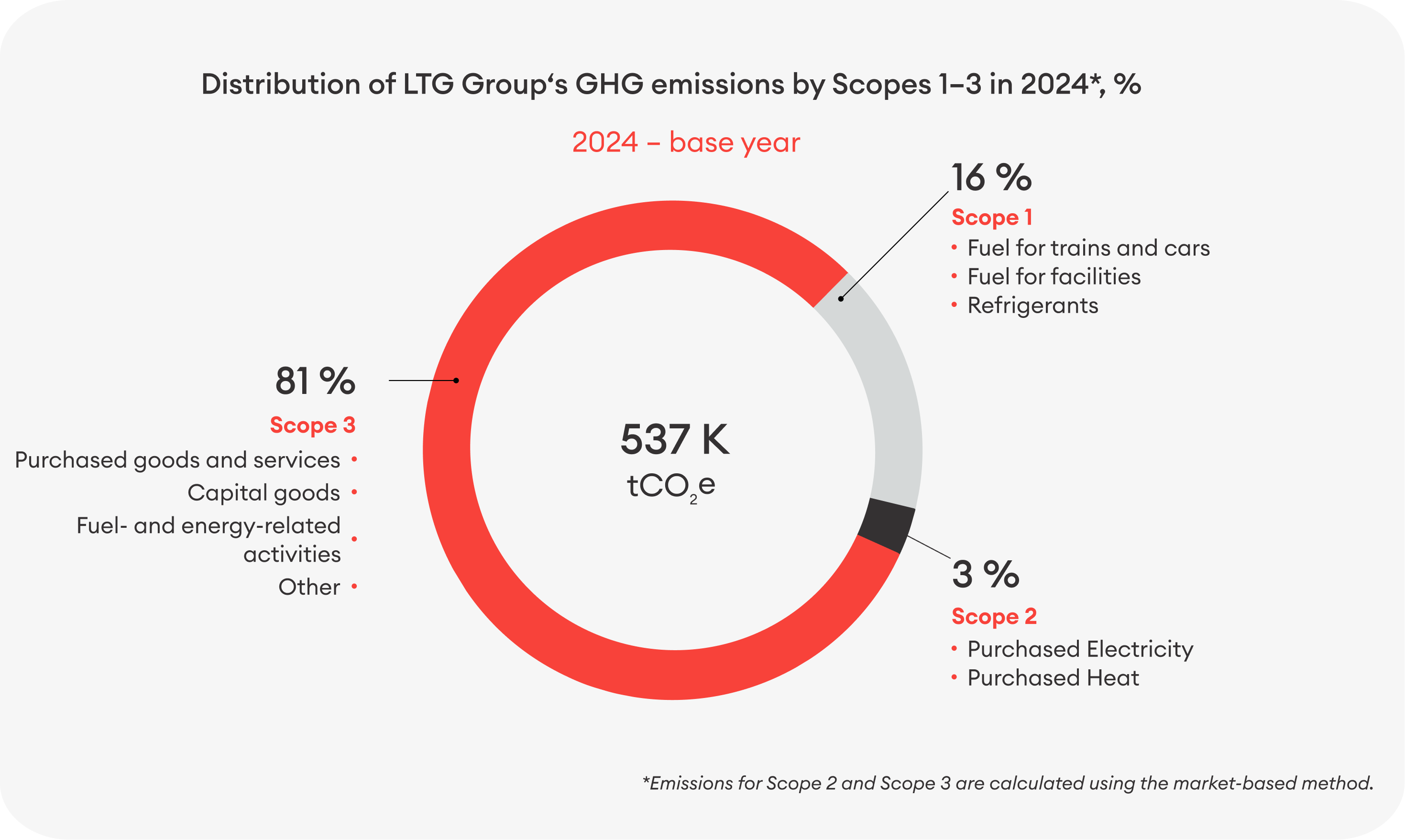
Decarbonisation is one of the Group’s key strategic priorities. To support this strategic direction, the Group has adopted a decarbonisation plan focused on reducing greenhouse gas (GHG) emissions from its direct operations (Scopes 1 and 2) by 42% and promoting a more sustainable supply chain.